


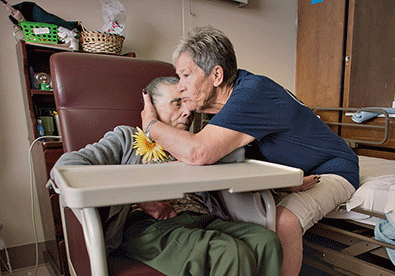
 Hospice care is a specialized form of healthcare that helps provide comfort and support to individuals facing the end of their lives. This can include patients with terminal illnesses and those who are terminally ill, but have not yet been diagnosed. Hospice care provides patients with dignity and comfort during their final days and supports their loved ones through this difficult time.
At Compassus, our dedicated team of hospice care providers works closely with patients and their families to ensure they receive the highest quality care possible. The definition of hospice care can be complicated, as it can vary depending on several factors. However, at its core, hospice care helps to provide patients with the physical, emotional, and spiritual support needed to make the most of their remaining time. Our Compassus team is here to help you learn more about our hospice care services and how we can support you or your loved one during this difficult time. Call our team at 833.380.9583 to discuss your or your loved one’s needs.
What Is Hospice Care?
The definition of hospice care is a type of care that focuses on providing comfort and support to terminally ill patients and their families. This can include physical, emotional, social, and spiritual support as patients near the end of life. Hospice care may be provided at home or in a specialized facility, depending on the patient’s and family’s needs.
Hospice care provides comprehensive solutions designed to meet the individual’s needs while dying. This could include visits from health professionals such as doctors, nurses, social workers, and spiritual care providers. It can also have:
- Counseling sessions and family meetings
- Symptom management to ease pain
- Medication management
- Physical activity
- Creative therapies such as music or art therapy
- Short hospital stays
In addition to these practical solutions, hospice care also encompasses providing spiritual care and emotional support to those involved. At Compassus, our goal is to help ensure patients feel emotionally connected with their loved ones or friends during this challenging time.
How Difficult Is Hospice Care?
Home hospice care can be challenging, but many family members choose it as a way to help support their loved ones. Medicare surveys show that almost 80 percent of caregivers say their hospice experience was positive. There will be good days and bad days. Thankfully, you are not alone. The hospice team at Compassus supports you throughout the journey. If you need a temporary break, respite care is covered by Medicare. It includes patient transport and up to five consecutive days of inpatient care at a nursing facility or hospital.
Medicare Hospice Benefits
Medicare benefits mandate a specific list of services for all Medicare hospice providers. These services include:
- Doctor services and consultations, including a plan of care
- Nursing care
- Medical equipment, such as wheelchairs, walkers, or medical beds
- Medical supplies, like bandages or catheters
- Prescription drugs for symptom control or pain relief related to the terminal illness
- Hospice aide and homemaker services
- Respite care gives caregivers short-term relief
- Physical therapy services
- Occupational therapy services
- Speech-language pathology services
- Social work services
- Dietary counseling
- Grief and loss counseling for you and your family
- Volunteer services for errands, friendly visits, or light support for caregivers
- Any other Medicare-covered services are needed to manage pain and other symptoms related to the terminal illness.
- Grief and loss counseling for you and your family
Hospice programs sometimes offer additional services such as music therapy, pet therapy, massage therapy, and more.
Additional Medicare Hospice Benefits
While the above list of Medicare hospice benefits is comprehensive, each program may offer additional services to improve patients’ and families’ quality of life. Some of the hospice benefits included with Medicare can consist of the following:
- Patients can get care after six months – Patients and families can continue to get comfort care as long as the hospice medical director re-certifies, at a face-to-face visit, that a hospice patient is terminally ill.
- Patients still get care for non-terminal conditions – Patients continue to receive regular medical care for conditions unrelated to their terminal illnesses. For example, a patient with diabetes can get checkups and diabetes medication with Medicare or their other insurance.
- You can end hospice care and return to curative treatment at any time – Families sometimes choose to end care because a patient’s health may improve or a new treatment becomes available.
- Access to respite care – The Medicare hospice benefit also includes respite care, so family caregivers have time off to recover and recharge. Medicare benefits pay for up to five consecutive days of inpatient care at a nursing facility or hospital. For patients already living in a nursing facility, the hospice benefit adds an extra layer of supportive care on top of 24-hour nursing care.
- Care during after-hours, weekends, and holidays – Hospice nurses are available 24/7 for emergency needs. Your care plan includes contact information and emergency information. Let the hospice know about lapses in emergency care.
To fully understand the type of hospice care coverage, reach out to Compassus today. Compassus provides hospice care to Medicare beneficiaries and accepts both hospice Medicare coverage as well as private insurance hospice plans. For more information click here.
Support and Care from a Hospice Care Team
Whether you are a family caregiver or a loved one, the hospice care team is here to support and help you throughout the journey. A hospice team may include the following:
- You and your family
- Your doctor and other health care providers
- Hospice medical director
- Nurses
- Hospice chaplain
- Hospice social worker
- Hospice aides
- Volunteers
- Volunteer coordinator
- Bereavement coordinator
If you or a loved one is looking for compassionate, supportive care through the end of life, consider reaching out to a reputable provider like Compassus for hospice care. Our experienced team will work closely with you and your family to provide quality care and support every step of the way.
Four Levels of Hospice Care
1. Routine Hospice Care at home
Routine home care is for patients wanting to maintain the best possible quality of life at home. Routine home care is provided in a person’s private home, assisted living residence, or nursing home. Support includes:
- Home medical equipment
- Medications
- Medical social services
- Spiritual support
- Volunteer visits
- Bereavement counseling
- Supplies related to the hospice diagnosis
2. Respite Care
Hospice respite care enables a patient’s caregiver to rest and recover from the demands of in-home care. Respite is also available when caregivers are traveling or attending an import event such a wedding or graduation.
Medicare pays for patient transport and up to five consecutive days of inpatient care at a Medicare-approved nursing facility or hospital. Respite care is not available when a hospice patient is living in a nursing facility.
3. Continuous Home Care
Sometimes, hospice patients need care at home when they experiencing a medical crisis. Medicare defines a crisis as a period of time when a patient requires a higher level of continuous care for at least eight hours in a day to manage pain, relieve breathing problems, or provide care for other serious medical symptoms.
The goal is intensive support to enable patients and their families to return to stable and routine home care. This in-home care is typically provided by licensed nurses in close communication with a doctor and family members. A hospice aide or homemaking services can supplement nursing care.
4. General Inpatient Care
If a patient has medical needs that cannot be managed at home, the hospice benefit includes round-the-clock care at a hospital or inpatient hospice facility. Patients can remain as long as required to control their symptoms. Medicare also covers the cost of transporting patients.
Learn More About Hospice Care at Compassus
Hospice care can be a challenging but essential part of the end-of-life process. At Compassus, we understand what you and your family are going through and will do everything we can to support you in your time of need. To learn more about the definition of hospice care or to get started with one of our programs today, contact us online or give us a call at 833.380.9583.
